

Cannabis & Arthritis: Could It Help With Joint Pain?

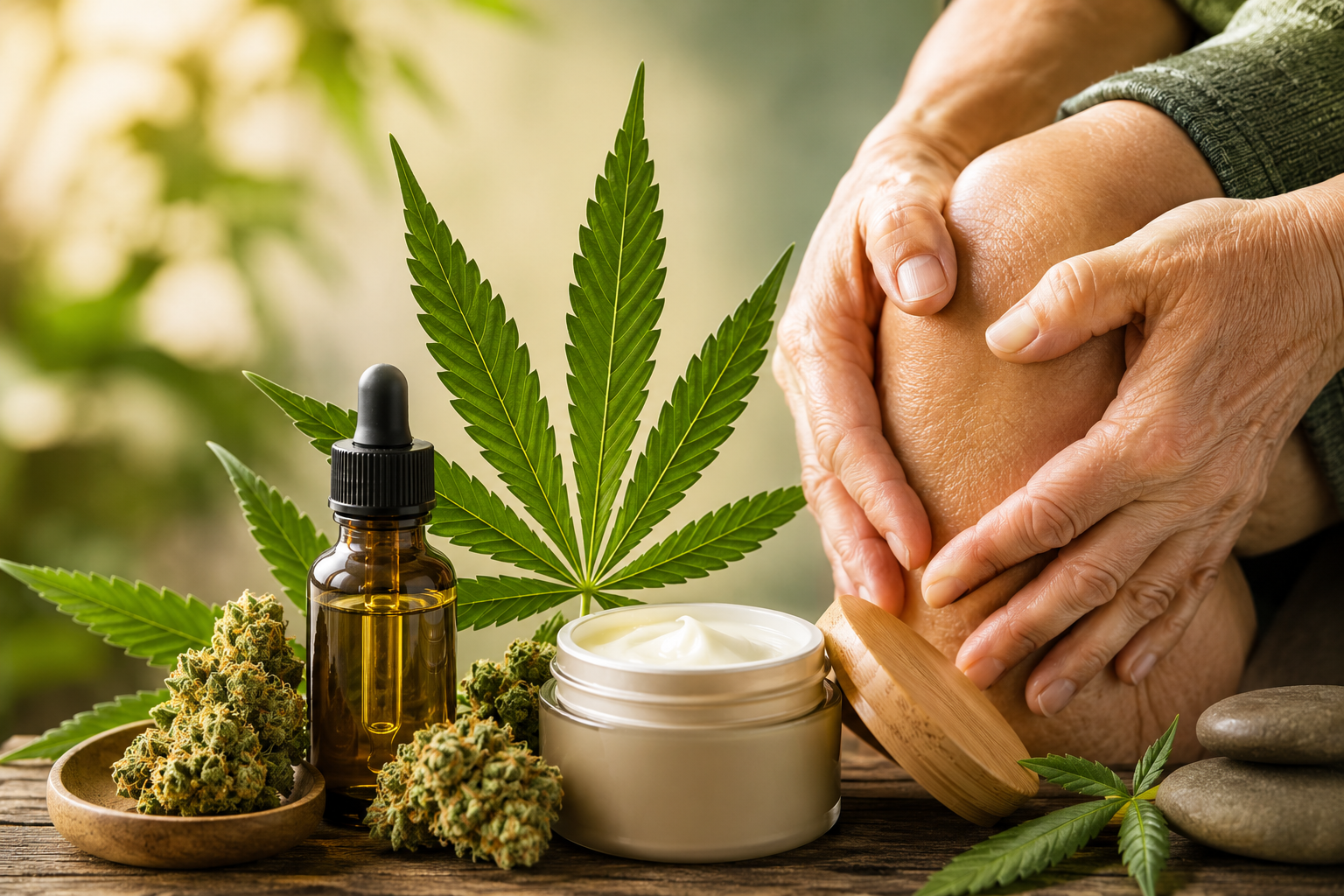
If you live with arthritis, you probably know how frustrating joint pain and stiffness can be. Some mornings your hands don’t want to cooperate. Your knees complain when you get up. Even simple everyday activities can sometimes feel like more work than they should.
It’s no surprise that more people are asking about cannabis and CBD for arthritis.
But does it actually help?
The answer isn’t quite as simple as yes or no. Research is still developing, but there’s enough interest in cannabis, pain and inflammation that scientists continue to take a closer look.
Let’s break down what we know.
Why Cannabis?
Cannabis contains compounds called cannabinoids. The two you’ve probably heard about most are THC and CBD.
Our bodies also have something called the endocannabinoid system, or ECS. It’s a natural communication system involved in several functions, including pain perception, mood, sleep and immune responses.
Cannabinoids from cannabis can interact with or influence this system, which is one reason researchers are interested in studying cannabis for chronic pain.
That doesn’t mean cannabis cures arthritis. But it may help explain why some people report feeling more comfortable when using certain cannabis products.
THC vs. CBD: What’s the Difference?
When talking about cannabis for arthritis, THC and CBD often get lumped together, but they’re quite different.
THC is the part of cannabis most associated with feeling “high.” It can also affect how we experience pain.
CBD doesn’t cause the same intoxicating effect. It’s often found in oils, capsules, creams and other wellness products.
CBD has received a lot of attention for its potential effects on pain and inflammation. While some early research is interesting, we still need better human studies before we can confidently say exactly how effective CBD is specifically for arthritis.
In other words: there’s potential, but there’s also still a lot to learn.
What About Cannabis Creams?
This is probably one of the first things people with sore hands, knees or other joints ask about.
What about putting a cannabis cream directly where it hurts?
Topical cannabis products—including creams, lotions, balms and salves—are designed to be applied directly to the skin.
For someone who doesn’t want to smoke cannabis or consume an edible, a topical product may seem like a more approachable option.
Some people report finding cannabinoid topicals helpful for localized discomfort, but products can vary enormously. Ingredients, strength and formulation all matter, and research specifically involving topical cannabinoids and arthritis is still limited.
So while you might hear someone say, “CBD cream works wonders for my knees,” that doesn’t necessarily mean everyone will have the same experience.
And that’s something worth remembering with cannabis in general.
Everyone Is Different
If you’ve spent any time around cannabis, you’ve probably heard two people describe completely different experiences with the exact same product.
That’s normal.
Our bodies aren’t identical.
Age, metabolism, medications, tolerance, body chemistry, THC and CBD content, dosage and even the way cannabis is consumed can all affect someone’s experience.
That’s why cannabis isn’t really a one-size-fits-all product.
What works well for your neighbour, friend or family member may not necessarily be the right choice for you.
Does Cannabis Actually Reduce Inflammation?
This is where things get especially interesting—but also where we need to be careful.
Researchers have found that cannabinoids can influence pathways involved in inflammation and immune function. A lot of that research, however, has been conducted in laboratories or animals.
Human arthritis is much more complicated.
There’s also an important difference between feeling less pain and actually treating the disease.
For example, rheumatoid arthritis is an autoimmune disease that can damage joints over time. Even if something makes a person’s joints feel better, that doesn’t necessarily mean it’s controlling the disease or preventing joint damage.
Cannabis should never be considered a replacement for arthritis medications prescribed by a healthcare professional.
More THC Doesn’t Mean More Relief
Here’s another misconception worth clearing up.
Stronger doesn’t always mean better.
People sometimes assume that if a little THC helps, a lot must help even more.
That’s not necessarily how cannabis works.
Too much THC can leave someone feeling dizzy, anxious, uncomfortable, sleepy or overly intoxicated. It can also affect balance and coordination—something that’s particularly important for older adults.
If someone chooses to use cannabis, starting cautiously is generally much more sensible than immediately reaching for the strongest product available.
And extra care should be taken with edibles.
Unlike smoking or vaping, an edible can take quite a while to kick in. Taking more because “nothing is happening yet” is an easy way to accidentally consume more THC than intended.
Don’t Forget About Your Medications
If you’re taking medication for arthritis—or anything else—this part is important.
Cannabis and CBD can interact with certain medications.
That doesn’t automatically mean you can’t use them, but it’s one of the reasons talking to your doctor or pharmacist is a good idea, particularly if you’re using cannabis for a health-related reason.
A pharmacist can also help you understand whether cannabis or CBD could potentially interact with medications you’re already taking.
So…Can Cannabis Help Arthritis?
The most accurate answer right now is:
Possibly for some people, particularly when it comes to managing certain types of discomfort—but we still need more research.
Some people living with chronic pain say cannabis or CBD has become a useful part of their routine. Others notice very little difference. Some don’t enjoy the effects at all.
And that’s okay.
Cannabis doesn’t need to be presented as a miracle cure to be worth researching.
The interesting question is whether certain cannabinoids, doses or products might eventually prove useful as part of a broader approach to managing arthritis symptoms.
Scientists are still working on that answer.
The Takeaway
If you’re curious about cannabis and arthritis, asking questions is a great place to start.
Learn the difference between THC and CBD. Understand the product you’re considering. Don’t assume higher potency means better results. And if you’re taking medications or managing an ongoing health condition, talk with your doctor or pharmacist.
Most importantly, remember that cannabis may help someone manage how they feel, but that’s very different from saying it treats or cures arthritis itself.
As cannabis research continues, we’re learning more all the time.
And when it comes to your health, good information is always worth having.
Disclaimer: This article is for educational purposes only and isn’t intended as medical advice or to diagnose, treat, cure or prevent any medical condition. Cannabis and cannabinoids may cause side effects and can interact with medications. Speak with a qualified healthcare professional before using cannabis or CBD for arthritis or another health concern.


 Creative
 Energetic
 Euphoric
 Focused
 Giggly
 Happy
Happy Hungry
 Pain Relief
 Sleepy
 Social
 Uplifted